A longitudinal foundation model of human diseases for high-confidence target discovery
longitudinal human health records powering disease-progression modelling
increased discovery power for clinically validated target biology
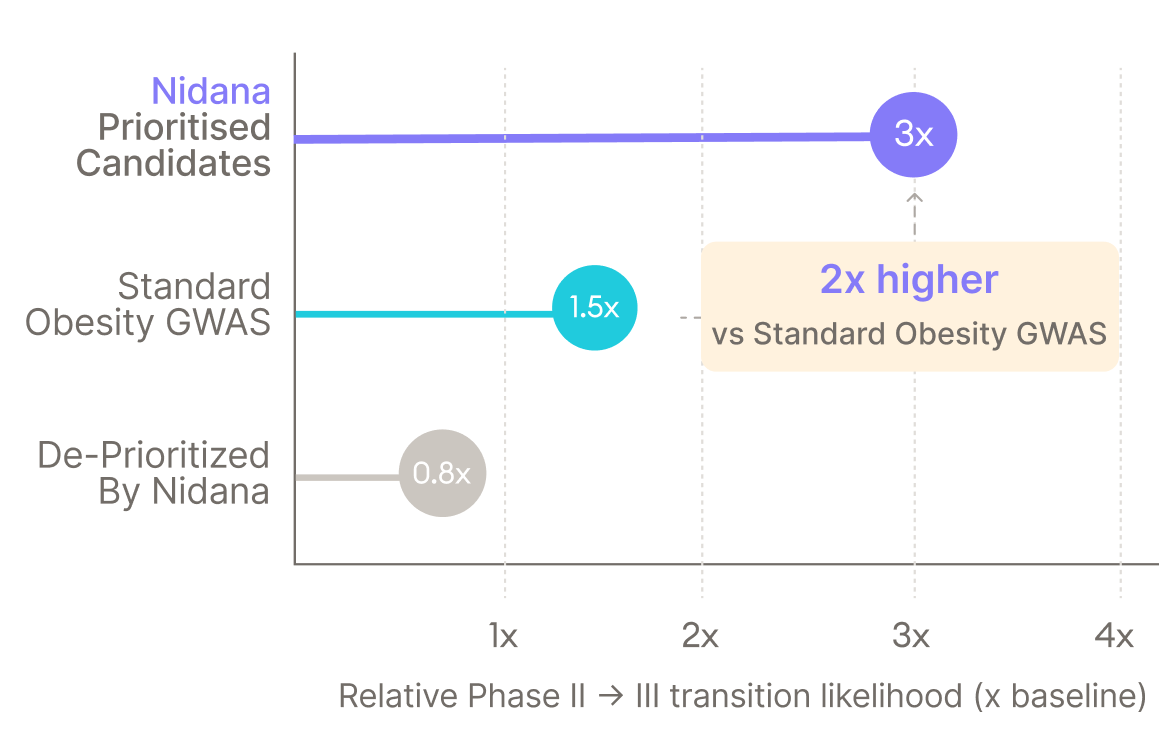
higher Phase II–III transition likelihood in retrospective benchmarking




Clinical trials fail when distinct biologies are treated as one disesase
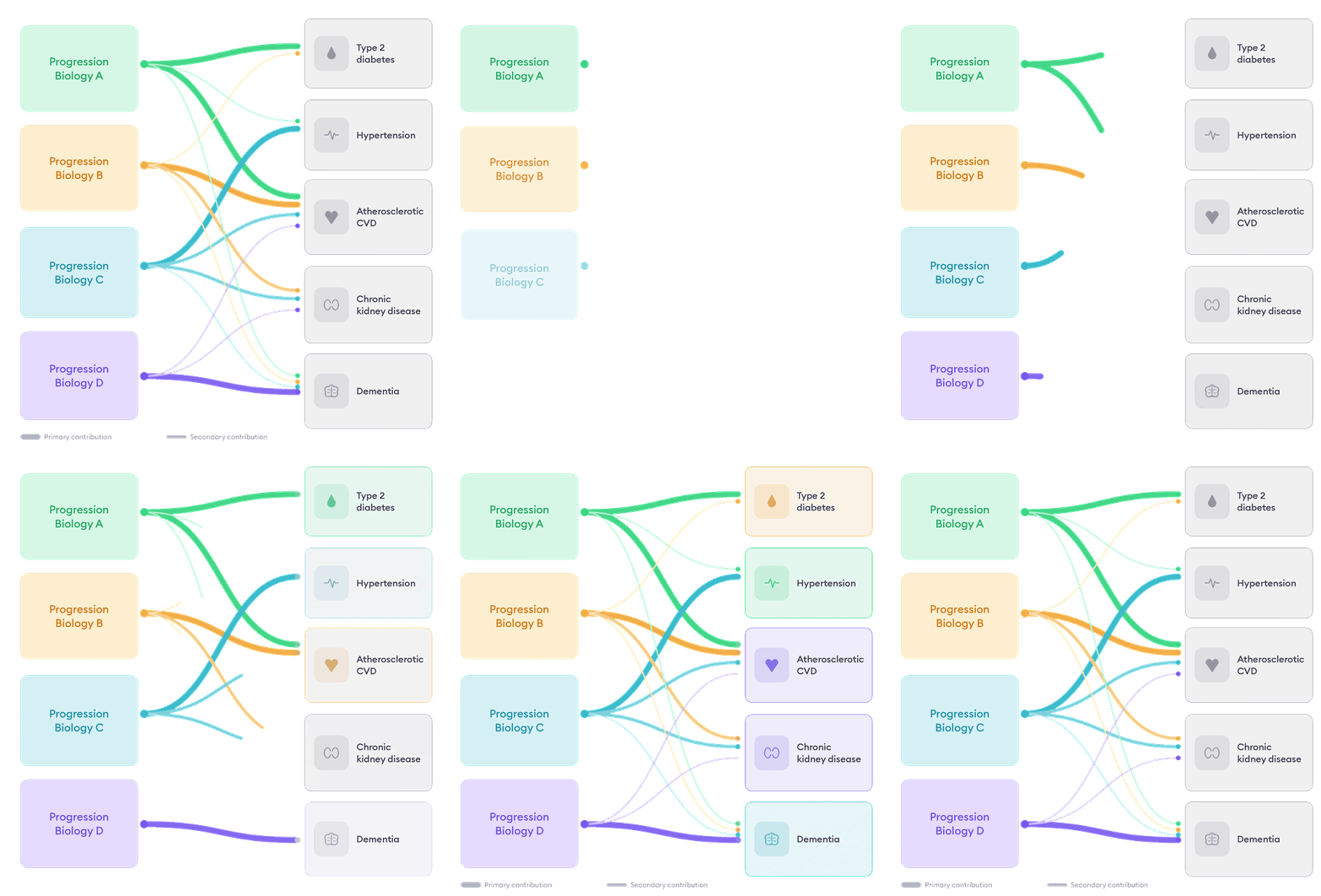
Nidana separates these mixed populations into longitudinal disease states, revealing the mechanisms that drive progression — not just the markers associated with diagnosis.
Nidana
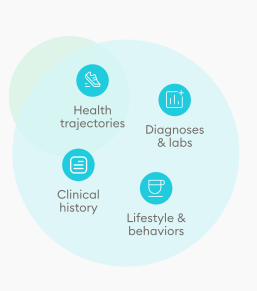
Trained on longitudinal phenotypic data,
captures progression biology and diseases trajectories.
Large-scale proprietary longitudinal data
250M+ longitudinal human health records

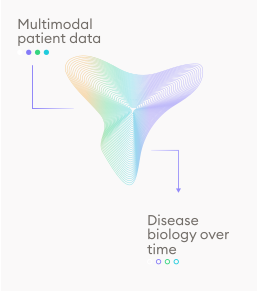
Longitudinal Modeling
Physics-first longitudinal foundation model
Learns disease progression biology over time.
Automated genetic discovery
State-of-the-art automated genetic discovery pipeline
GWAS

OMICS

Causal inference

Network expansion

Lab-in-the-loop validation
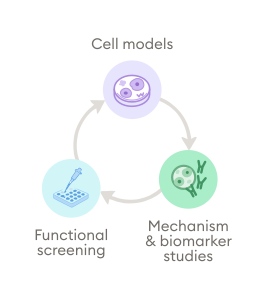
Active experimental validation closes the loop
Large-scale proprietary longitudinal data
250M+ longitudinal human health records
Longitudinal Modeling
Physics-first longitudinal foundation model
Learns disease progression biology over time.
Automated genetic discovery
State-of-the-art automated genetic discovery pipeline
GWAS
OMICS
Causal inference
Network expansion
Lab-in-the-loop validation
Active experimental validation closes the loop
More accurate phenotypes reveal more therapeutically relevant targets
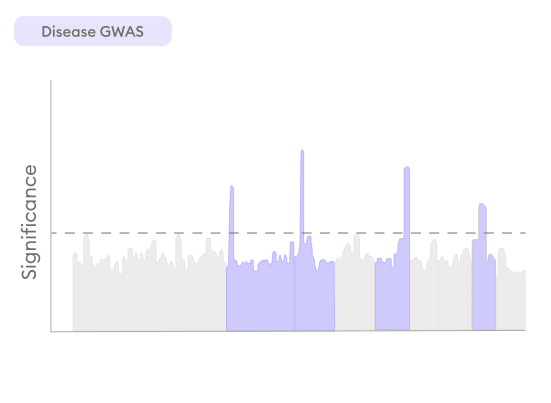
Conventional discovery
Genetic studies run directly on ICD labels, which group together patients with different underlying biology — diluting the genetic signal and producing a long, unprioritized list of targets.
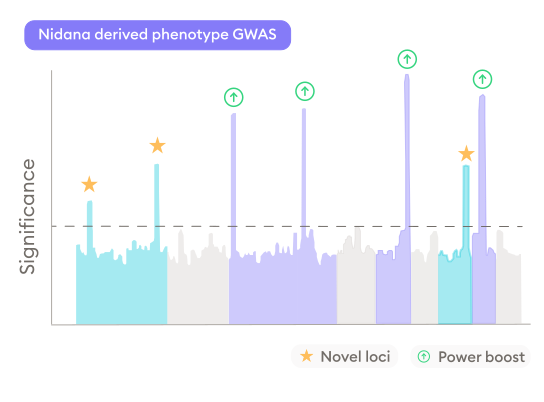
Longitudinal discovery
By reducing phenotypic heterogeneity before genetic analysis, Nidana reveals stronger associations and additional loci linked to disease progression and target biology.

From GWAS hits to validated causal targets
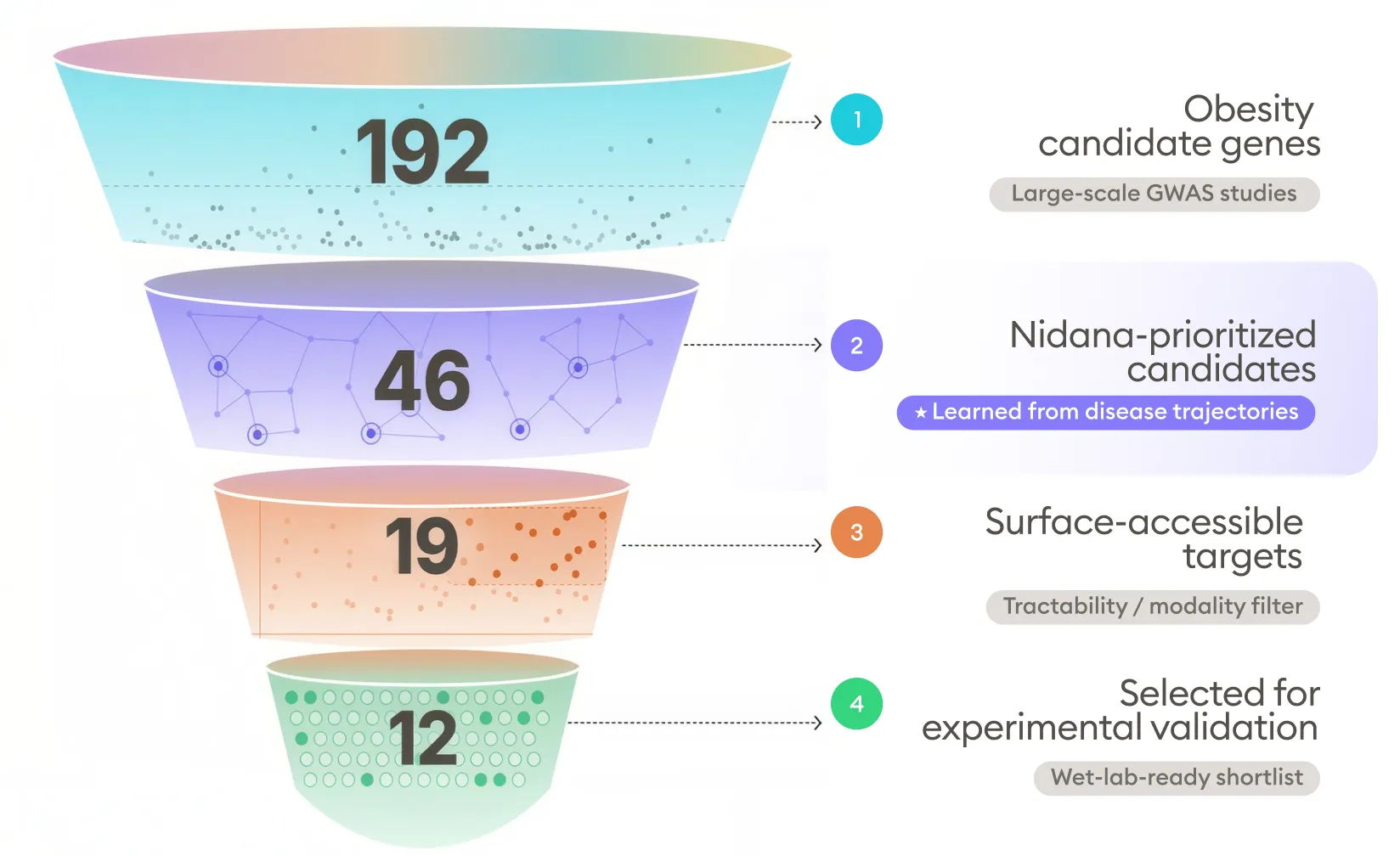
Obesity GWAS identifies many associated loci, but translating those associations into disease-driving, therapeutically tractable targets remains challenging. Nidana uses longitudinal disease biology to filter broad GWAS signals into a smaller set of progression-linked targets with stronger clinical-transition potential.
Prioritised candidates show higher Phase II → III transition rates in retrospective benchmarking